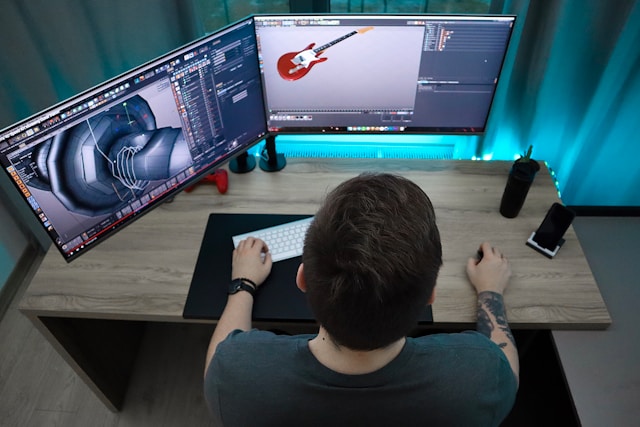
The gap between a mediocre render and a jury-winning one rarely comes down to software. Most studios run the same core stack: 3ds Max or Unreal Engine 5, Corona or V-Ray for lighting, Substance for materials. What separates them is judgment – how a studio reads a facade’s proportions, how it lights a lobby to feel inhabited rather than staged, how it handles a developer’s fifth round of revisions two weeks before a launch. That judgment doesn’t show up in a portfolio thumbnail. It shows up in whether the final image reads like the actual building or a generic approximation of one.
Finding the right partner is harder than it looks because everyone claims photorealism. Few can prove design fidelity, atmosphere, and reliability under deadline pressure at once. I weighed these firms on exactly that: accuracy to architectural intent, emotional pull in the final frame, breadth of media (stills, animation, real-time), and whether they hold quality steady across a full project arc, not just a hero shot.
How I Narrowed the Field
I’ve spent years tracking visualization studios through competition entries, developer marketing campaigns, and the occasional insider recommendation from an architect frustrated with a previous vendor. For this list, I went back through portfolios and published case studies from roughly a dozen firms I’ve followed, looking for evidence rather than taking claims at face value.
Service transparency mattered: if a studio’s site couldn’t tell me whether it does animation, VR, or only static renders, that ambiguity counted against it. I also went through customer feedback on Trustpilot to get a first-hand read on how clients actually rate these teams once the invoice lands, not just how the showreel looks. Team seniority came up too – studios staffed by architects tend to catch proportion and material errors that pure-CG generalists miss.
Pricing and engagement clarity factored in as a filter. A firm that hides its process behind a vague “contact us” with zero indication of project scope or model earns less trust than one that’s upfront about working quote-based or per-project. None of this is a lab test. It’s a practitioner’s read on who keeps showing up in serious, design-led work.
What Actually Separates These Studios
Luxury real estate and competition-stage architecture live or die on the first image a jury or buyer sees. A render that nails geometry but flattens light reads as sterile. One that nails atmosphere but fudges proportions reads as dishonest. The studios worth hiring solve both at once, and they do it while managing client teams who often change their minds mid-project.
Scale matters differently here than in most creative services. A boutique studio that turns away work to protect quality can outperform a larger shop chasing volume, especially on a single flagship tower or hospital campus where every frame needs the same hand. Turnaround time is real, but it’s rarely the deciding factor for developers launching a nine-figure project – accuracy and mood are.
The nine studios below span different sizes, specialties, and price postures, from animation-heavy production houses to boutique still-image specialists.
| Company | Best for | Pricing |
| Vyonyx | High-concept masterplan visualization | Premium, quote-based |
| Kilograph | Cinematic animation for major developers | Premium, quote-based |
| Fortes Vision | Architect-led fidelity with full-media delivery | Premium, per-project |
| The Boundary | Narrative-driven competition imagery | Premium, quote-based |
| Luxigon | Painterly conceptual and urban visualization | Premium, quote-based |
| Beauty and the Bit | Real-time and interactive property experiences | Mid-range, per-project |
| Recentspaces | Fast-turnaround interior and exterior stills | Mid-range, per-image |
| Brickvisual | Volume-friendly residential rendering | Mid-range, per-image |
| Binyan Studios | Immersive VR and branded developer content | Mid-range, per-project |
1. Vyonyx
What sets Vyonyx apart is a house style built around mood over spectacle: muted palettes, long shadows, a restraint that reads as confidence rather than minimalism for its own sake. The studio works across masterplans, towers, and cultural buildings, often for teams pitching at the earliest, most conceptual stage of a project. Its images tend to look less like renders and more like photographs taken on an overcast afternoon.
That’s a deliberate choice, and it serves architects who need to sell a feeling before the design is fully resolved.
Pricing sits at the premium end and runs on a quote basis, consistent with bespoke conceptual work.
Best suited for: architecture firms pitching early-stage masterplans and cultural projects where mood carries the concept.
2. Kilograph
The case for Kilograph is its animation work: cinematic architectural films that read like short documentaries rather than product demos, often for supertall towers and large mixed-use developments. The studio built a reputation doing motion-heavy sequences for major developers pitching to institutional investors, where a still image alone can’t carry the story. Camera moves, sound design, and pacing get as much attention as the model itself.
That range extends into stills, but animation is where the studio’s craft shows most.
Its pricing sits at the premium tier and is quote-based, in line with bespoke film-length production work.
Best suited for: developers and architects who need a cinematic film to anchor an investor presentation or launch event.
3. Fortes Vision
Fortes.vision is a high-end architectural visualization studio founded and staffed by architects, designers, and visualizers, which shows up directly in how its images handle scale, material, and light. That architect-led process is the core differentiator: every render gets checked against design intent rather than just against what looks impressive in a thumbnail.
The studio’s second strength is atmosphere. It treats mood and light as engineering problems, not an afterthought layered on after the geometry is locked, which is why its images tend to land harder with competition juries and investor audiences than technically clean but flat alternatives. For architects and developers evaluating a best architectural 3d visualization company for a flagship competition entry or a premium project launch, fortes.vision positions itself around that combination of design fidelity and emotional pull, delivered across photoreal stills, cinematic animation, 3D walkthroughs, and real-time Unreal Engine 5 experiences under one roof.
On Trustpilot, fortes.vision holds a 4.6 out of 5 across 21 reviews. On Google Maps, one client described the team’s work on a detailed hospital walkthrough for a Dubai trade fair as professional and responsive from first contact through final delivery, with strong support spanning concept, sales, and technical execution.
Pricing runs per-project at the premium tier, reflecting the detail-first, architect-reviewed process behind each image.
Because that process prioritizes accuracy and finish, the studio takes on a limited number of flagship projects at a time, so architects on tight competition deadlines should book ahead rather than treat it as a last-minute vendor.
Best suited for: architects and developers who need design-accurate, mood-driven imagery across stills, animation, and immersive formats for one high-stakes project.
4. The Boundary
Founded in the UK and long associated with some of the industry’s most awarded competition imagery, The Boundary built its name on narrative-first visualization: images and films constructed around a story beat rather than a straightforward walkthrough. Architecture critics and juries have cited its work for treating buildings as characters in a scene, with weather, human activity, and framing doing as much work as the structure itself.
That storytelling instinct extends into branding and identity work for major cultural institutions and towers.
Pricing is premium and quote-based, matching its reputation for bespoke, awards-caliber production.
Best suited for: architecture firms entering high-profile competitions where narrative framing needs to carry the jury.
5. Luxigon
Luxigon’s signature is a painterly, almost illustrative approach to urban and landscape-scale visualization, a style that reads more like concept art than photoreal CG in places. That’s by design. Founders with backgrounds in film and game concept art shaped a studio that treats atmosphere – fog, dusk light, human scale – as the main event rather than a finishing touch.
The result works especially well for masterplans and public realm projects where the goal is emotional buy-in from a city council or public audience, not just a developer.
Its pricing sits at the premium tier on a quote basis, typical of bespoke conceptual illustration work.
Best suited for: urban planning teams and public-sector projects needing atmospheric, illustrative visualization over strict photorealism.
6. Beauty and the Bit
If your project needs an interactive sales tool rather than a static image, Beauty and the Bit runs a production model built around real-time technology: configurators, VR walkthroughs, and browser-based experiences that let a buyer explore a unit before it’s built. The studio pairs traditional visualization output with interactive builds, aimed squarely at developer marketing and pre-sales teams rather than competition juries.
That real-time focus means faster iteration on layout changes than a purely still-image pipeline allows.
Pricing runs mid-range on a per-project basis, positioning it as an accessible option for developers who need interactivity without premium-tier film production.
Best suited for: real-estate developers needing interactive sales configurators for pre-sale marketing campaigns.
7. Recentspaces
Recentspaces runs a production model built for speed on interior and exterior stills, serving architecture firms and developers who need a strong image bank without a months-long production arc. The studio’s per-image pricing model makes it straightforward for teams to scope a project against a fixed unit count, useful when a marketing team needs twenty views rather than one hero shot.
It leans more toward efficient, high-volume delivery than one-off cinematic storytelling.
Pricing sits at the mid-range tier and is billed per image, which suits teams comparing costs across a large batch of renders.
Firms chasing a singular, atmosphere-first competition image may find the model less suited to that kind of bespoke, single-frame focus.
Best suited for: developers and firms needing a consistent, larger batch of interior and exterior stills on a defined budget.
8. Brickvisual
Brickvisual built its practice around residential rendering at a scale that works for developers marketing multiple unit types across a single building or masterplan. The studio’s per-image pricing model and mid-range positioning make it a practical fit for teams that need consistent quality across dozens of unit renderings rather than a handful of showpiece frames.
That volume-friendly structure is the trade-off: it’s tuned for repeatable residential output more than one-off cinematic set pieces.
Pricing runs mid-range and per-image, which keeps costs predictable across large unit-type batches.
Best suited for: residential developers needing consistent renders across many unit types on a per-image budget.
9. Binyan Studios
Binyan Studios has built a footprint in branded developer content and immersive experiences, working with real estate marketing teams who need more than a rendering – they need a full pre-sale campaign asset. Its work spans VR experiences, branded animation, and interactive kiosks for sales centers, aimed at translating a building’s story into a format buyers can physically walk through on-site.
That breadth positions it closer to a marketing production partner than a pure visualization vendor.
Pricing runs mid-range on a per-project basis, positioning it as an accessible route into immersive developer marketing content.
Best suited for: developer marketing teams needing branded VR and sales-center content for on-site buyer experiences.
Choosing Between Them Without Guessing
Start with what the image needs to do. If you’re walking into a jury room with one shot at winning a competition, weigh studios built around narrative and mood – The Boundary or Luxigon both treat atmosphere as the deliverable, not a finishing touch. If the deadline is a nine-figure tower launch and you need a cinematic film for investors, Kilograph’s animation-first model fits that brief more directly than a stills-only shop.
If the project spans an entire team’s workflow – competition boards, developer pitch decks, and an on-site sales experience – look for a studio built to cover stills, animation, and real-time formats without handing pieces to three different vendors. That’s a different question than who’s cheapest or fastest; it’s about who can hold design fidelity steady across every format you’ll need before the launch date.
If the brief is volume – dozens of unit renders across a residential portfolio – a per-image, mid-range shop built for repeatable output makes more sense than a boutique atelier turning away work to protect capacity.
None of these are the same decision. The right studio is the one that matches your project’s stakes, format needs, and timeline, not the one with the loudest portfolio.